

How to Service Your Air Conditioning at Home or in the Office
A professional air conditioning service should always be carried out by a qualified engineer, but there are simple maintenance checks you can do yourself to keep your system clean, efficient and working comfortably between visits.

What you can safely do yourself
Home and office users can safely carry out basic care such as cleaning the air filters, wiping the indoor casing, keeping airflow clear and checking the outdoor unit for leaves or obstructions. This helps the system breathe properly and can reduce unnecessary strain.
Filter cleaning
Dusty filters restrict airflow. A clean filter helps the unit move air through the room more easily.
Airflow checks
Make sure furniture, blinds, shelving or office equipment are not blocking the indoor air outlet.
Early warning signs
Water leaks, poor cooling or heating, unusual noises or persistent smells are signs to call an engineer.
MHI diagram: main parts of the system
The Mitsubishi Heavy Industries manual shows the key areas to be aware of: the air inlet panel, air filters, air outlet, aluminium heat exchanger fins, indoor fan and outdoor unit airflow areas.

Step-by-step: cleaning your AC filters
The MHI manual recommends filter cleaning at regular intervals during the operating season, with a standard guide of around once every two weeks. Busy offices, salons, shops and dusty rooms may need more frequent checks.
Turn the system off
Stop the air conditioner with the remote controller, then turn off the power source before starting maintenance.
Open the air inlet panel
Stand firmly on a stable step ladder. Place your hands at both sides of the lower part of the panel and gently pull the panel forward.
Remove the air filters
Hold the filter carefully at both sides, lift slightly and pull it forward. Do not touch the aluminium fins behind the filter.
Vacuum or wash the filters
Use a vacuum cleaner for light dust. If the filter is very dirty, wash it gently with warm water of around 30°C. Top tip - Take into the shower and clean out with shower head.
Dry thoroughly
Allow the filters to dry fully before refitting. Do not use boiling water and do not dry them over an open flame.
Refit securely
Insert the filters securely and close the panel evenly. Do not run the system without the air filters fitted.


Cleaning the indoor unit casing
Once the power is off, the indoor unit casing can be wiped with a soft, dry cloth. If it is very dirty, use a cloth lightly dampened with warm water. Do not spray water into the unit and do not use harsh cleaners, solvents, petrol, thinners or abrasive products.

What to check outside
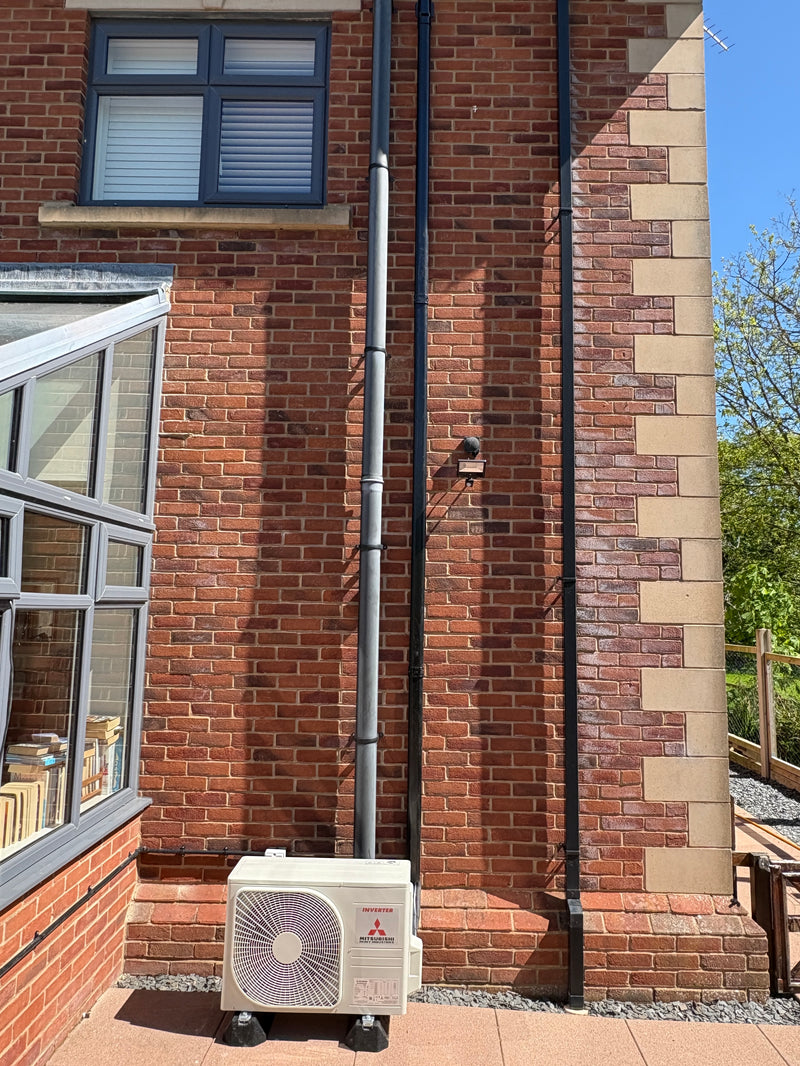
The outdoor unit needs good airflow. You should not open the outdoor unit, touch refrigerant pipework or attempt electrical work, but you can keep the surrounding area clear.
Air-cleaning filters: what to know
Some MHI units include additional air-cleaning filters, such as an allergen clear filter and a photocatalytic washable deodorising filter. These sit behind the main air filter and should be inspected as part of routine maintenance.

Simple guidance
Use a vacuum cleaner to remove dust from the allergen clear filter. If it cannot be cleaned, or it has been in use for around a year, replacement may be needed. The washable deodorising filter can be gently washed if particularly dirty, but it should not be scrubbed aggressively.
For replacement filters or anything beyond basic cleaning, speak to the original installer or a qualified air conditioning company.
Why regular AC maintenance matters
Cleaning your air conditioning system is a small job that can make a noticeable difference. It helps airflow, comfort, running efficiency and the overall condition of the system.
Better comfort
Clean filters help warm or cool air circulate properly around bedrooms, living rooms, offices and commercial spaces.
Less strain
When airflow is blocked, the system has to work harder. Keeping filters clean helps reduce unnecessary pressure on the unit.
Fewer avoidable issues
Basic checks can help you notice water leaks, poor airflow, smells or unusual noises before they become bigger problems.
When to call a professional engineer
Filter cleaning is useful, but it is not a replacement for a professional service. Book an engineer if the unit is leaking water, making unusual noises, giving poor performance, showing error lights or has not been inspected for a long time.
Quick maintenance checklist
This simple checklist is suitable for most homes and offices. For commercial spaces, higher-use systems may need more frequent checks and a planned service schedule.
Thinking about replacing an older AC unit?
If your current system is noisy, inefficient, unreliable or no longer powerful enough for the room, it may be worth comparing repair costs with a modern replacement. Discount Air Conditioning provides clear online pricing for installed systems, helping homeowners and businesses get a fast guide price before booking.
Frequently asked questions
How often should I clean my air conditioning filters?
The MHI manual gives a standard guide of around once every two weeks during the operating season. In busy offices, salons, shops or dusty rooms, filters may need checking more often.
Can I wash my AC filters?
Yes, many filters can be washed gently in warm water of around 30°C if they are very dirty. Let them dry thoroughly before reinstalling. Do not use boiling water or dry over an open flame. Using the shower head or hosepipe is perfect for this job.
Can I service the full system myself?
No. You can clean filters and carry out simple checks, but electrical work, refrigerant checks, repairs and internal deep cleaning should be carried out by a qualified engineer.
Why does my air conditioning smell musty?
Musty smells can come from dust, moisture or build-up inside the unit. Clean the filters first. If the smell continues, arrange a professional clean or service.
Should an office AC system be serviced more often than a home system?
Often, yes. Office and commercial systems usually run for longer hours and may collect dust more quickly, so a planned maintenance schedule is recommended.
Need help with your air conditioning?
Whether you need advice, a professional check or a price for a new installed system, our team is here to help make air conditioning simple.